


Regional Conference Communiqué
National Conference on Dialogue and Mediation in Mining-Affected Areas
Theme: Promoting Peace, Environmental Justice, and Community Resilience in Zimbabwe
1.0 Preamble.
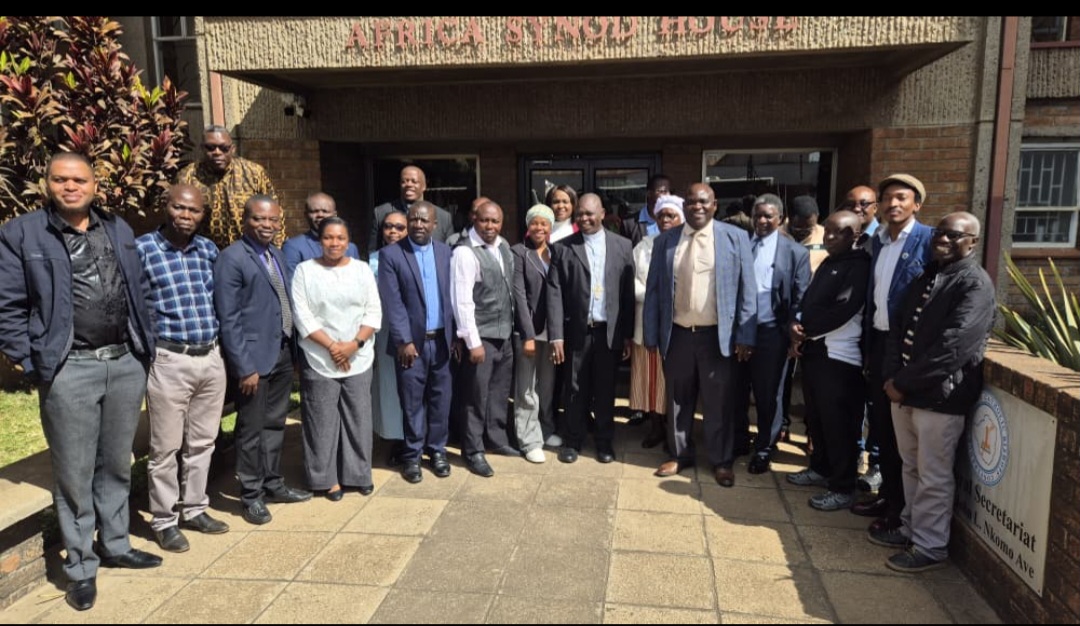
A sacred convocation for justice and stewardship. The Symposium of Episcopal Conferences of Africa and Madagascar (SECAM) initiated a National Conference on Dialogue and Mediation in collaboration with Zimbabwe Catholic Bishops’ Conference (ZCBC) in Harare, Zimbabwe. The initiative gathered Communities, Church leaders, government institutions, civil society, and mining stakeholders gathered at Africa Synod House in Harare for a two-day National Conference on Dialogue and Mediation in Mining-Affected Areas. Under the theme, “Promoting Peace, Environmental Justice, and Community Resilience,” participants engaged in meaningful discussions on the social, environmental, and economic impacts of mining, while exploring pathways towards sustainable development, ecological justice, and peaceful coexistence. The conference provided a platform for mining-affected communities, especially traditional leaders, women, youth, and vulnerable groups, to share their lived experiences and contribute to shaping practical solutions. Through dialogue, mediation, and collaborative action planning, stakeholders worked towards strengthening accountability, environmental stewardship, community participation, and long-term resilience across region.
Guided by the Scripture; “Let justice roll down like waters, and righteousness like an ever-flowing stream” (Amos 5:24) and inspired by Pope Francis’ call to ecological conversion in Laudato Si’, we affirm that mining must be stewardship, not exploitation. This conference has been a sacred convocation to listen to the cries of the earth and the cries of the poor, and to discern pathways of justice, peace, and resilience.
2.0 Key Observations
Communities spoke with one voice about broken promises and exclusion as follows;
- Communities remain impoverished despite vast mineral wealth;
- Broken promises by investors are widespread.
- Governance frameworks, notably the Mines and Minerals Act (1961), are outdated and do not favour and empower the indigenous/locals and thus inadequate.
- Corporate Social Responsibility (CSR) remains voluntary and unenforceable, leaving communities vulnerable. It needs to be legalised.
- Documentation of community experiences is not comprehensive and extensive, limiting access to justice.
- Regional frameworks such as the Africa Mining Vision and SADC Protocol on Mining exist but lack enforceability at national level.
- Mining has displaced families, environmental pollution including polluted water sources and degraded environment, desecrated ancestral graves, and eroded livelihoods.
- Women, youth, and persons with disabilities are excluded from decision-making and disproportionately affected.
2.1 Resolutions and Commitments
We commit to concrete actions that place justice and communities at the center of extractive governance as follows;
- Transparency and Accountability
- Governments must publish mining revenues and strengthen accountability systems in the Mines and Minerals Amendment Bill.
- Communities must be empowered to monitor and document promises, violations, and environmental damage.
- Community Participation and Inclusion
- Establish accessible, low-cost dispute resolution mechanisms at district level.
- Revitalize Village Development Committees (VIDCOs) and Ward Development Committees (WADCOs) structures through training in mediation, negotiation, and mining law.
- Ensure inclusion of women, youth, and persons with disabilities in mining governance.
- Environmental Stewardship
- Enforce Environmental Impact Assessments and protect biodiversity.
- Safeguard ancestral graves and cultural heritage in line with Environmental Management Agency (EMA) and Museums Acts.
- Develop community-led environmental monitoring initiatives.
- Corporate Responsibility
- Advocate for enforceable CSR provisions in law, ensuring communities benefit from mining operations.
- Engage the Diplomatic missions and mining cooperations operating in Zimbabwe on cases of non-compliance, child abuse, and unfair labour practices and equitably.
- Regional Solidarity
- SECAM will develop a regional advocacy position, drawing on the Africa Mining Vision and SADC Protocol on Mining.
- Establish a Regional Extractive Governance Working Group to sustain dialogue and monitor commitments.
3.0 Call to Action
The responsibility is shared amongst the stakeholders; governments, companies, civil society, and communities must act together. We call upon:
- Governments to align mining legislation with justice, transparency, and common good to benefit the community especially the poor, vulnerable and with disabilities.
- Mining companies to respect local cultures, protect the environment, and provide fair compensation.
- Civil society and the Church to amplify community voices, provide legal aid, and foster dialogue.
- Communities to strengthen documentation, solidarity, and participation in governance.
4.0 Conclusion
This communiqué embodies our collective resolve to transform mining from a source of conflict into a pathway of peace, justice, and resilience. We affirm that the goods of the earth are destined for all (Psalm 24:1), and we commit ourselves to stewardship that ensures future generations inherit a world of dignity and abundance.
Together, we proclaim: “Do not pollute the land where you are” (Numbers 35:33).
Adopted at Africa Synod House, Harare, Zimbabwe, on 04 June 2026.