


14th Sunday Year A
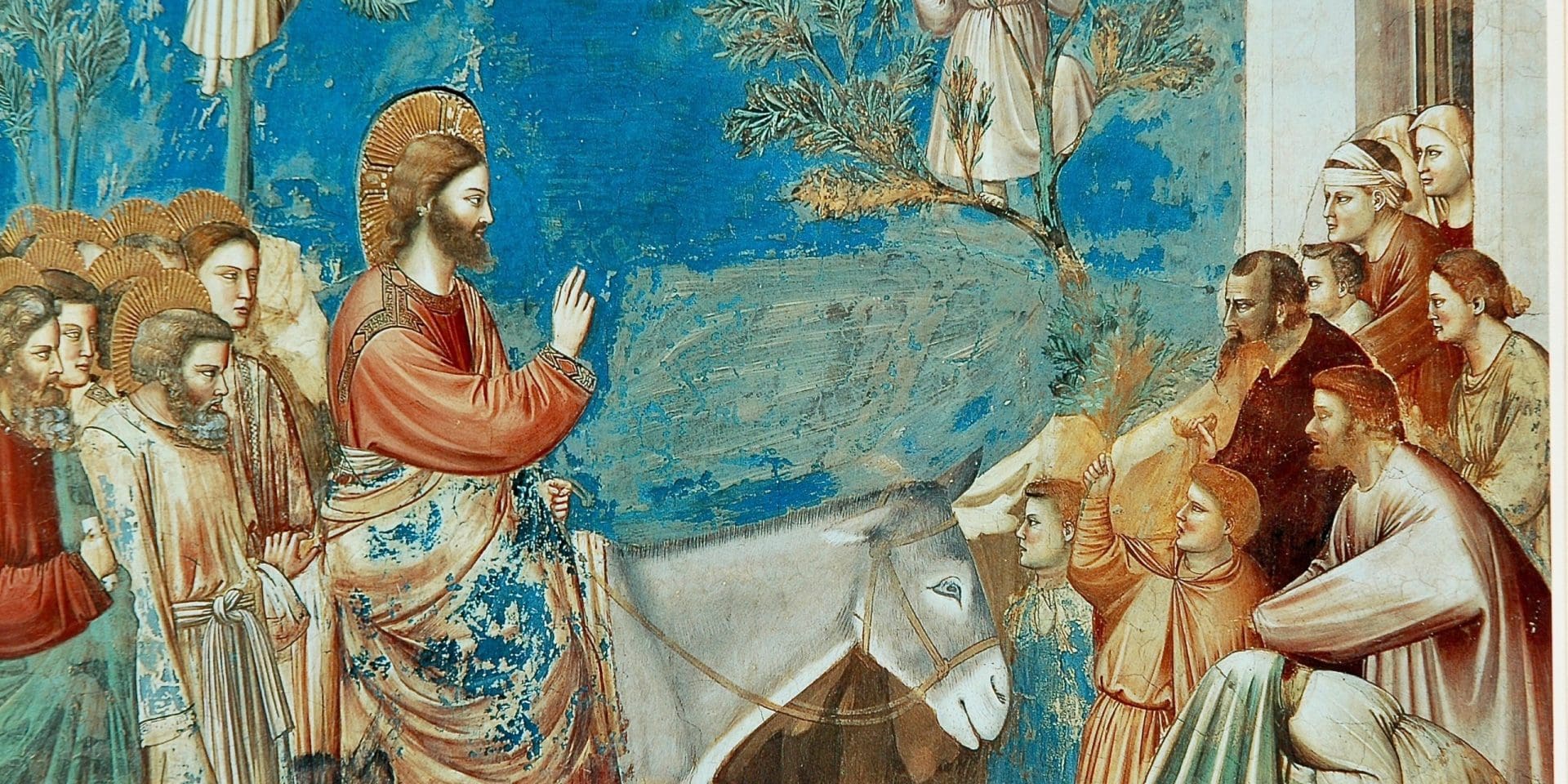
Both the Responsorial Psalm and the Gospel open with an acclamation of praise. In the Psalm, God is exalted as the divine king whose greatness cannot be fathomed. In the Gospel, He is Father and Lord. Notwithstanding the Responsorial Psalm’s reference to God as King, it needs to remain clear what kind of king we are presented with here. The first reading tells us that this king is riding on a donkey. In Old Testament times, a king on a donkey would have been seen as a sign of humility. In fact, the Prophet says he is a saviour who is meek. Similar qualities are spoken of in reference to the Lord in the Responsorial Psalm; he is gracious and merciful, he is slow to anger and is of great kindness, good to all and compassionate.
The praise of God in the Gospel flows from the lips of Jesus. At this point, I would like to tell a story that I heard from a certain archbishop. One day, a footwear company decided to open a branch in a country where there were no shoe factories; to this end, they sent two employees to the location to assess the situation firsthand and gauge the potential opportunities. After surveying the scene, one of the employees wrote to the company stating that there was no chance for their factory there because everyone went around barefoot. The other, however, wrote to the company saying that they had the chance to make a fortune, because no one wore shoes there yet.
Jesus is like the second employee. We need to remember the preceding episodes. Before this, Jesus was abandoned by those who had ideas of grandeur and pomp. Even his cousin, John the Baptist, sent disciples to ask Jesus whether he was really the expected Messiah or was another to be expected. This was based on the language of Jesus. He was speaking of values that were not as exciting as they wanted to hear. The powerful of the time, as well as John the Baptist, were expecting somebody to incite them into grandstanding and valour displays. Jesus came and spoke about being merciful and being peacemakers. The word used both in the first reading and in the Gospel is meekness. God is meek. Jesus is meek. This quality, meekness, refers to one who is not in the slightest to retaliate with threats or violence. Yes, it does not mean weakness; no, contrary to that, it means the strength of gentleness. The powerful started pulling away from him, and only the lowly and vulnerable were left following Jesus. It was at this point that Jesus said, like the second shoe factory employee, “Oh, happy fault!” If things were different, all these lowly ones would have missed out on the Kingdom, and for this, he says, “Thank you, Father.”
The Lord then looks at the lowly ones around himself and realises that they are tired. They have been the ones to do all the menial work, but also they were burdened with all the rules and prohibitions. On the Sabbath alone, there were 39 prohibitions, and mainly they affected those who provided menial labour. They were indeed in need of rest. It is these humble ones who know the Father because they have seen the Son and, by extension, the Father. Jesus invites them and promises them his yoke, a new and easy yoke. A yoke is an agricultural implement. It brings two oxen together and causes them to be in a partnership. This should remind us of the Garden of Eden, where it all began. God from the beginning envisaged a collaborative partnership. A yoke is a beam, and thinking of it, we should remember the wood of the cross. Jesus invites his yoke bearers to humble service, which leads to rest on the Cross.
This is a new world that Jesus is inviting us to. One consistent element of the people of the new yoke of Jesus is that they are always few in number. They are few because the yoke of Jesus is in contradiction to popularity. This is so because in collaboration, partners must always seek to find each other. There is no time in the New Yoke City where it is just about one or the other partner. If things don’t work out, a solution is sought in harmony. This new reality that Jesus is inviting us to requires humility. If you believe and I believe, then this New Yoke City of Jesus will become a reality. One Andrew Gillies wrote a poem entitled “The Two Prayers”. I would like to end with it:
Last night my little boy confessed to me
Some childish wrong;
And kneeling at my knee, he prayed with tears-
“Dear God, make me a man like Daddy-wise and strong;
I know you can.”
Then while he slept
I knelt beside his bed, confessed my sins,
And prayed with low-bowed head.
“O God, make me a child
Like my child here-
Pure, guileless,
Trusting Thee with faith sincere.”