


The sixth plenary assembly of IMBISA took place from Monday 30 July to Wednesday 8 August 2001 at the Chishawasha Seminary in Harare, Zimbabwe. The theme of the plenary was Poverty and economic justice in the new millennium: a Christian approach.
25th anniversary of IMBISA
At this assembly, IMBISA celebrated its silver jubilee that it should have celebrated the previous year, but could not because of the Great Jubilee of the Year 2000 in the universal Church.
Pope says no new evangelisation unless poverty tackled
In a message from the Vatican Secretariat of State, the bishops were assured that the Holy Father was praying that the work of IMBISA
will stir the Churches of Southern Africa still more to bear witness to Christ by promoting justice and peace on the Continent and throughout the world, for there can be no new evangelisation unless there is a new determination to tackle Africa’s many forms of poverty in the light of the Gospel of salvation.
Our people have become poorer
In the welcome address, Bishop Alexio Muchabaiwa, president of the Zimbabwe Catholic Bishops’ Conference noted that it was the third time a plenary was held in Zimbabwe:
The last two Plenaries took place when our country was slowly assuming its national status in the world as an independent country. It was our expectation as a Church that after independence our country as well as those in our region would be prosperous and peaceful. This, however, is not what we see as can be seen from the theme of our topic for this Plenary. … Our people have become poorer by the day, unemployment is rampant, the health delivery system in a poor state, and so on. We cannot be spectators.
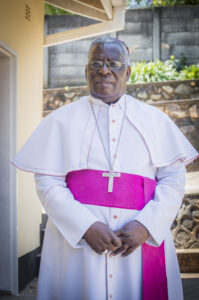
Bishop Alexio Muchabaiwa, president of the Zimbabwe Catholic Bishops’ Conference (Photo: catholicchurchnewszimbabwe.org)
Remain with the poor
President Robert Mugabe, who was present at the opening ceremony of an IMBISA plenary for the third time, concluded his address to this plenary as follows:
The issue is for the Church itself to remain with the poor for that is where it gets its righteousness. Please make those of us in the Government remain true and committed servants of the needy, the widow, the poor and the fatherless. I thank you.
Support message from SECAM
The President of SECAM, Archbishop Laurent Monsengwo-Pasinya of Kisangani, who could not attend in person, had his address read by the Executive Secretary of SECAM, Fr. Peter Lwaminda. The Archbishop said,
There is a pervasive and almost blanket societal feeling of desperation, hopelessness and helplessness in the face of the mounting crisis in Africa permeating all areas of social life. Poverty, disease, famine, hunger and starvation, corruption, mismanagement, graft and unethical practices, excessive human rights abuses, political intolerance, dictatorship and militarism have helped to spawn war on an ever-growing scale on the whole continent.
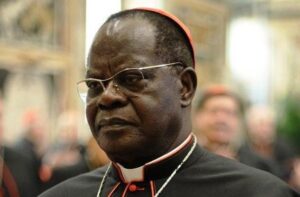
Archbishop Laurent Monsengwo-Pasinya of Kisangani, President of SECAM (Photo: combonimissionaries.co.uk)
While the Church does not have the means to solve all these challenges, she can still contribute to their solution, he said. “It is in this spirit, I believe, that this Plenary Assembly is being held.”
General Secretary appeals to Bishops’ pastoral charity
The General Secretary, Archbishop Damião Franklin appealed in his report, that the Bishops be generous and help with releasing priests for different jobs at the Secretariat. He said:
No Bishop loses anything in sending his priest for three years and/or more, since the experience gained during this time will be enriching for the future apostolate of the respective priest in his home diocese.
Inflation and the social problems of Zimbabwe have seriously affected the finances, aggravated, too, by late payment of the levies by some Bishops, according to Archbishop Franklin.
1978 Declaration of Intent
Each department in its report gave its particular history of the past 25 years in celebration of the silver jubilee.
In his report, Fr. Juan José Luna Erreguerena MG, J&P Coordinator, reminded the Bishops of the Declaration of Intent adopted in 1978 at Mazenod, Lesotho.
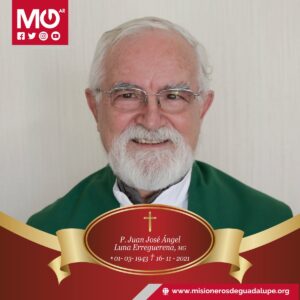 Accordingly, IMBISA will address itself to, among others, the prophetic role of the Church, Justice and Peace, Refugees, Migratory Labour, Family Life, and so on.
These matters, he said, the bishops in 1978 declared, “will receive our deep pastoral attention”.
Work on inculturation
Fr. Josef Elsener SMB, coordinator of the office of Theological Reflection and Exchange, established following a decision of the 1995 Plenary in Windhoek, reported, among others, on the work on inculturation done so far in the region.
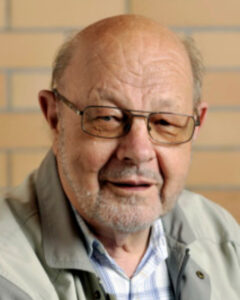
Fr. Josef Elsener SMB (photo: imbethlehem.ch)
He noted the words of Cardinal Francis Arinze at the Plenary Assembly of SECAM, that the “African Synod urged that inculturation be more intensively promoted in Africa and Madagascar. It even mentioned the examination of ancestor veneration.”
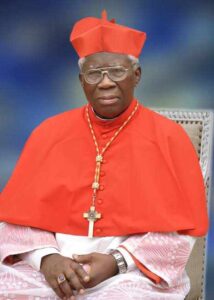
Cardinal Francis Arinze (Photo: nigeriacatholicnetwork.com)
Cardinal Arinze went on to ask the Bishops at that SECAM plenary: “How much progress has been made? How much encouragement has been given to the theologians to engage in the process of inculturation?”
Kuchenura munhu, kurova guva
Fr. Elsener mentioned the work done in Zimbabwe as a typical example of the efforts in this area. He said those efforts “centre around the traditional ceremonies of accommodating the spirit of a deceased person and the Christianised rite of Bringing home the spirit of the deceased, Kuchenura munhu, kurova guva.”
Listening to the poor will enrich Church
From the Message from IMBISA Bishops, entitled The Challenge of Poverty in Southern Africa:
In some ways, the Church is a ‘sleeping giant’. We have great resources and dedicated personnel, we have the poor themselves who are the treasures of the Church, but we need to properly focus and implement these resources. … Listening to the poor we will discover within them many spiritual and human gifts which have been suppressed for so long. These will enrich our Church and our entire society.
New IMBISA president
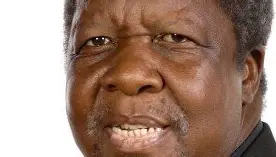
Bishop Louis Ncamiso Ndlovu of Manzini (photo: tzaneencatholic.blogspot.com)
The plenary elected Bishop Louis Ndlovu of Manzini president of IMBISA, and Bishop Adriáno Langa, Auxiliary of Maputo general secretary.
Sources
IMBISA. 2001. Minutes of the IMBISA Sixth Plenary Assembly 2001. Poverty and economic justice in the new millennium. A Christian approach. 30 July – 8 August 2001, Chishawasha Seminary, Harare, Zimbabwe. Harare: IMBISA.
On synodal journey for 50 years
In celebration of the golden jubilee of IMBISA, formed in 1975, we publish snippets of history once a week.