


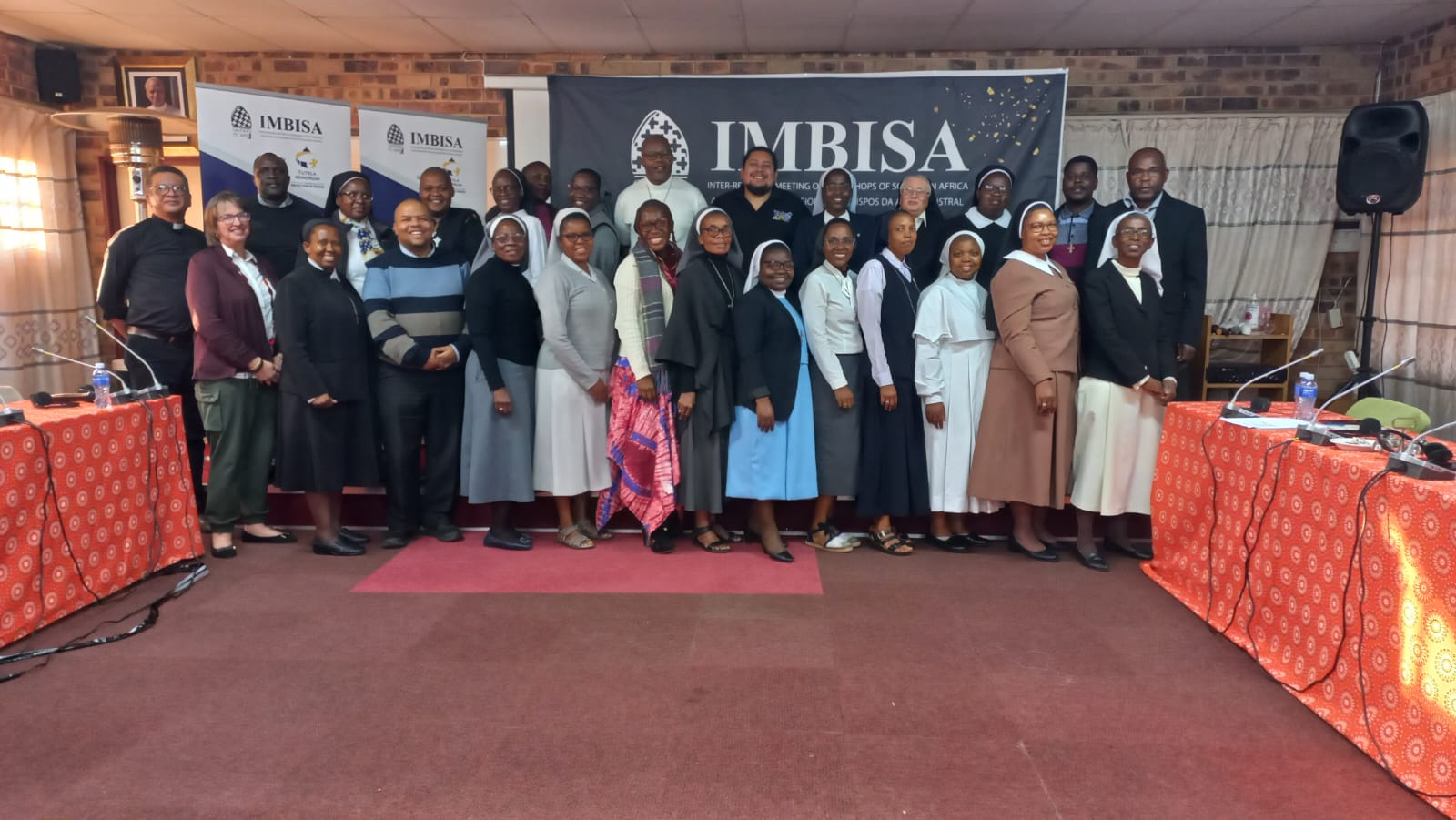
The Inter-regional Meeting of the Bishops of Southern Africa, IMBISA, held a gathering for religious men and women focusing on mental health and self-care. 29 participants from 8 countries and 22 congregations in the IMBISA region participated in the workshop held at Padre Pio Spirituality Centre in Pretoria, South Africa, from 31 August to 4 September 2026. The meeting aimed to raise awareness of the importance of mental health and encourage local bishops’ conferences and religious congregations to strengthen their work in this area for the good of the Church.
Father Agostinho Maholele, CSS, Mozambican priest of the Congregation of the Most Holy Sacrament, and a clinical psychologist trained at the Eduardo Mondlane University in Mozambique and the Pontifical Gregorian University in Rome was one of the two specialists leading the workshop.
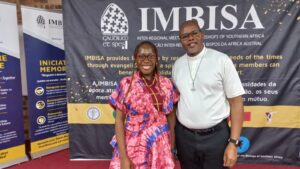
Dr. Anthonia Otunla and Fr. Agostinho Maholele, CSS
Dr. Anthonia Bisola Otunla, health-care clinician, a graduate of the College of Medicine of the University of Lagos in Nigeria and holder of several post-graduate degrees, who works in the Catholic Mental Health Ministry of Nigeria and is a committed laywoman of the Archdiocese of Lagos accompanied Fr. Agostinho in leading the presentations.
Fr. Maholele led the participants in a psychological re-reading of Laudato si’, stating that self-care is the fuel that allows your light to shine brightly. “An empty lantern gives no light,” he said, adding that the most important function of mental health care is quality of life.
In a subsequent presentation, he showed how alcohol abuse is an illness that sometimes has no cure, affects us to the extent that our life and mission as religious become fragile and broken. He showed the various types of treatment available but warned that it is a lifelong illness, with healing taking place day to day only with the greatest personal and communal effort.
“There is no health without mental health,” he said, urging participants to be aware of and work to overcome the inconsistency there often is between our real selves and the ideal self of the consecrated person. Not only is awareness of this necessary in basic formation, but especially important in ongoing formation for an integrated life of freedom as religious.
Dr. Otunla pointed out that compassion fatigue, emotional exhaustion from caring for others, unresolved trauma, wounds from the past that never received healing, and constant giving without replenishment, coupled with the unrealistic expectations, and the drive to be perfect, always available, and always joyful, if not addressed as a result of mental health awareness, risks losing the sense of self. But to struggle with it is not a sign of weak faith but of being human. Faith and mental health are partners, she said, not enemies. Mental health is integral to human dignity. She quoted St. Paul, saying that
“we have this treasure in jars of clay, to show that the surpassing power belongs to God and to us” (2 Corinthians 4:7).
As wounded healers, and because we are baptized in Christ, she showed that our wounds can become sources of healing, only if we allow the wounds to begin to heal. We allow wounds to be transformed into compassion. She quoted Isaiah 53:5, where the prophet said:
He was wounded for our transgressions, crushed for our iniquities; upon him was the punishment that brought us peace, and by his wounds we are healed.
Dr. Otunla expressed the hope that in the IMBISA region, we will build a culture of mental health by constantly supporting and accompanying one another.
Groups reflected on set questions provided by the presenters at the end of each presentation through the method of Conversation in the Spirit, in an atmosphere of prayer and listening.
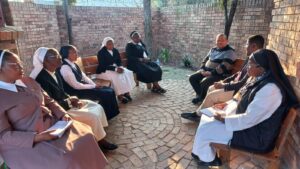
One of the small groups engaging in Conversation in the Spirit
Participants committed to be for the IMBISA region the light of the world and the salt of the earth, knowing, that, enriched with their weeklong experience of enrichment, they will give people hope, with the confidence that hope does not deceive. They will endeavour to take this experience to their own contexts, giving feedback to their bishops and superiors to raise awareness of the importance of mental health and self-care. Mental health is an urgent task. They made the following commitment:
We commit ourselves to self-care by listening to oneself, having time to rest and creating boundaries. We will review our schedules and programmes, eliminate and reduce where needed to make time for rest and exercise, taking care of ourselves. In this way we live and lead by example.
The desire for similar workshops in the different countries and dioceses was repeatedly expressed by participants. IMBISA Secretariat Director, Fr. Enrico Parry undertook to report to the Bishops of the Standing Committee the participants’ wish that bishops’ conferences work together to establish some type of regional mechanism that will assist local efforts to improve mental health.