


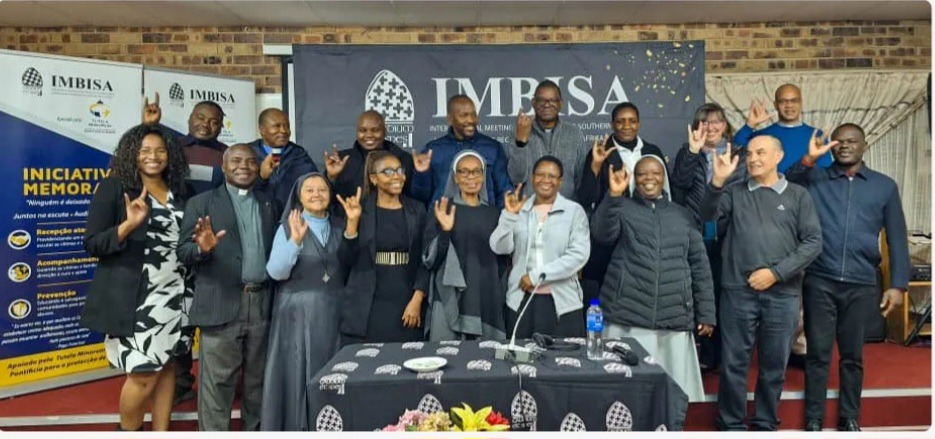
The workshop on Communication and Disability, promoted by IMBISA, took place from 27 April to 1 May at the Padre Pio Retreat Centre, Pretoria, South Africa, under the theme “Bridging the gap: A regional conference on communication and disability in the IMBISA region”, with the participation of delegates from all IMBISA Episcopal Conferences, including bishops, priests, religious, and lay people. At the end of the workshop, the delegates reached the following conclusions and recommendations:
- The synodal journey has proved to be a particularly opportune moment to respond to the fundamental request that the faithful with disabilities make to the life of the Church: their full inclusion in the life of the family of God.
- Knowing and respecting the physical, social, and educational characteristics, as well as the abilities and capacities of people with disabilities, is the first step in enabling the Church to guarantee an inclusive living environment.
- The inclusion of people with disabilities requires moving from mere welcoming to active participation, recognising them as full Catholic Christians, not just recipients of help. Therefore, a synodal Church must eliminate physical, communicational, and attitudinal barriers, guaranteeing access to the sacraments and integrating them into catechesis and pastoral life.
- The delegates commit themselves to working within the Church and beyond to overcome prejudice and the mentality of a “separate group”, promoting a true conversion of heart that embraces disability as part of the diversity of the community.
- The accessibility and inclusion of people with disabilities should be prioritised and guaranteed in the Church. Therefore, people with disabilities can serve as catechists, readers, and pastoral leaders, as encouraged by Pope Francis, moving from “them” to “us.”
- Inclusion, in a synodal Church, is a right and an expression of God’s love, theologically grounded in the recognition of the other as the image of God. Therefore, it is urgent to create awareness groups to promote accessibility and the training of pastoral agents, ensuring that the liturgy and catechesis are adapted so that everyone can understand and experience the faith.
- The elimination of architectural barriers that make churches inaccessible should be encouraged, as well as the translation of celebrations into sign language, the provision of audio descriptions, and the availability of ecclesial documents in Braille.
- Disabilities do not represent illness or inefficiency in the social and ecclesial environment. On the contrary, churches that promote such inclusion demonstrate a welcoming attitude as the family of God.
- Pastoral agents should be trained to accompany people with disabilities on personalised paths of preparation for the sacraments, including Holy Orders and Marriage. It is also necessary to empower people with disabilities so that they can contribute as witnesses and formators. In particular, couples living with disability can collaborate in family pastoral care within the dioceses.
- Catechists should be trained in accompanying the mystagogical journey of the Christian faith, with particular attention to people with disabilities. It is also important that formation programmes for seminarians adequately include the topic of disability, Braille, and sign language, as well as direct testimonies from persons living with disabilities.
- The role of pastoral agents in relation to people with disabilities in the Church should focus on full inclusion, welcoming, evangelisation, and the promotion of the inalienable dignity of every individual, eliminating both physical and attitudinal barriers. Therefore, it is urgent to encourage, influence, and raise awareness among communities, catechists, and other pastoral agents about the importance of inclusion.
Delegates