


4th Sunday of Easter Year A, 26 April 2026
Acts 2:14a, 36–41 , Psalm 23, 1 Peter 2:20b–25 and John 10:1–10
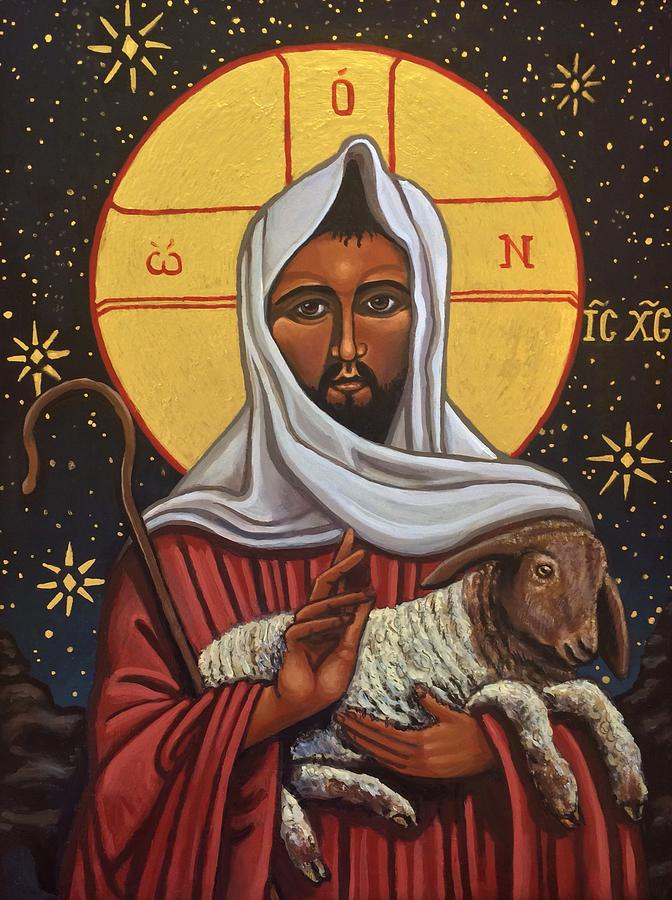
The gospel reading places into sharp focus the mission of Jesus as a Good Shepherd: “So that all may have life and have it abundantly”.
The Fourth Sunday of Easter is nicknamed the Good Shepherd Sunday. This is due to what Jesus says in John 10: 11, “I am the Good Shepherd”. We are invited to pray for vocations, especially vocations to the priesthood and religious life. However, we should never forget that all the baptised are called and have a vocation, especially the vocation to holiness. Every baptised person must faithfully serve God and his people. A Christian vocation is a participation in the mission of Jesus who came that all may have life and have it abundantly.
By calling himself a shepherd, Jesus places himself in a long line of shepherds in the history of humanity. This includes Abel (Gen 4) Abraham (Cf. Gen 13), Jacob (Cf. Gen 47) and David (Cf. 1 Sam 16). At the time of the prophets, the image of a shepherd began to signify a ruler or a politician. God promises to be a good ruler who will send good shepherds to guide Israel. In Ezekiel 34: 11 we read, “For this is what the Sovereign Lord says: I myself will search for my sheep and look after them”. Also, Jeremiah 3:15 states, “Then I will give you shepherds after my own heart, who will lead you with knowledge and understanding.”
This leads us to Psalm 23 which speaks of the Lord as a Shepherd. We note the care of the Lord as he attends to the material needs of David. He lacks nothing, led to verdant pastures, enjoying rest, in restful waters, refreshes the soul, no fear of evil, closeness as the Lord remains at his side, courage, abundant food at table, anointed head, overflowing cup, goodness and kindness and finally dwelling in the house of the Lord forever. In fact, David owns the Shepherd: The Lord is MY Shepherd. Thus, we get the clear indication that whoever is placed in charge of a group must make sure that all enjoy abundance of life in the here and now.
Yet, even as we discern provision of material needs in the psalm, some of these are spiritual including enjoying rest, refreshing the soul, companionship of the Lord, goodness and kindness. We can also include anointing here as spiritual care in so far as this is afforded to the sick. Peter, in the first reading, mentions some of the spiritual needs to his audience including baptism, doing penance, forgiveness of sins and reception of the Holy Spirit. He also adds that this “promise is for you and for your children”. As such, it is generational. A shepherd thus, must lead people to the full life attained through baptism, the forgiveness of sins and the attainment of the Holy Spirit.
Thus, each one of us needs to ask oneself today: Am I a Good Shepherd? Do I truly care for the people entrusted to me? My family? My parents? My employees? My parishioners? My school, etc? Can I truly say that I am participating fully in the mission of Jesus in that those in contact with me have life in abundance?