


3rd SUNDAY IN ORDINARY TIME
Introduction
Isaiah addressed people faced with fear and political instability. The northern regions of Zebulun and Napthali were among the first to suffer invasion by the Assyrian empire. These lands experienced humiliation, loss and despair. It is in this painful reality that Isiah announced God’s promises. Isaiah does not deny the suffering of people, instead he mentions it honestly. He announces that the world that once was covered with darkness will now see light.
First reading: God alone will liberate you
Isaiah speaks of moments of joy and harvest which are moments of relief and restoring dignity. God promised to break the yoke that burdens the people, symbols of oppression, fear and injustice. This liberation is God’s action alone.
This passage speaks deeply to our own darkness of uncertainty, fear, spiritual darkness and doubt. People of Isaiah’s time looked for quick solutions and earthly securities. Isaiah reminds us that true light comes from God.
Christians sees this promise fulfilled in Jesus Christ who enters personal darkness: addiction, grief and sin with liberating light. The text invites us to trust that God is at work even if it feels heavy and unclear. There is darkness today, but God still promises light, joy and freedom.
Second reading: be one in Christ
Paul addresses a serious problem in the Corinthian community, namely division. The Corinthians were arguing among themselves which preacher is more meaningful to them or even claiming that only they belong to Christ. This damaged the unity of the church.
Paul begins with a strong appeal for unity so that the community may be of the same mind and purpose. It does not mean that everyone should think alike but that they be united in faith, love and mission. For Paul a division among the believers is a contradiction of what it means to belong to Christ.
He asks pointed questions: is Christ divided or has Paul been crucified for you? This question reminded the Corinthians that their faith is centred around Jesus alone, not human leaders. He clarifies that Jesus did not send him merely because of the merits of the baptized, but to preach the gospel. This is not a rejection of baptism, but to make it possible that people know that the power of faith does not come from personalities or rituals, and that salvation comes through the Cross. Paul insist that the gospel must not depend on human wisdom, eloquence or statutes; that will empty its true power.
The gospel that Paul preaches challenges us to examine our own attitude within the Church. We too can be divided by preference, opinions or loyalty to people or groups. Paul reminds us that unity remains in Christ Crucified. When we focus more on who is right than on loving one another, the reading brings us back to light and true life. That alone brings us unity and peace.
Gospel: letting go of security and comfort
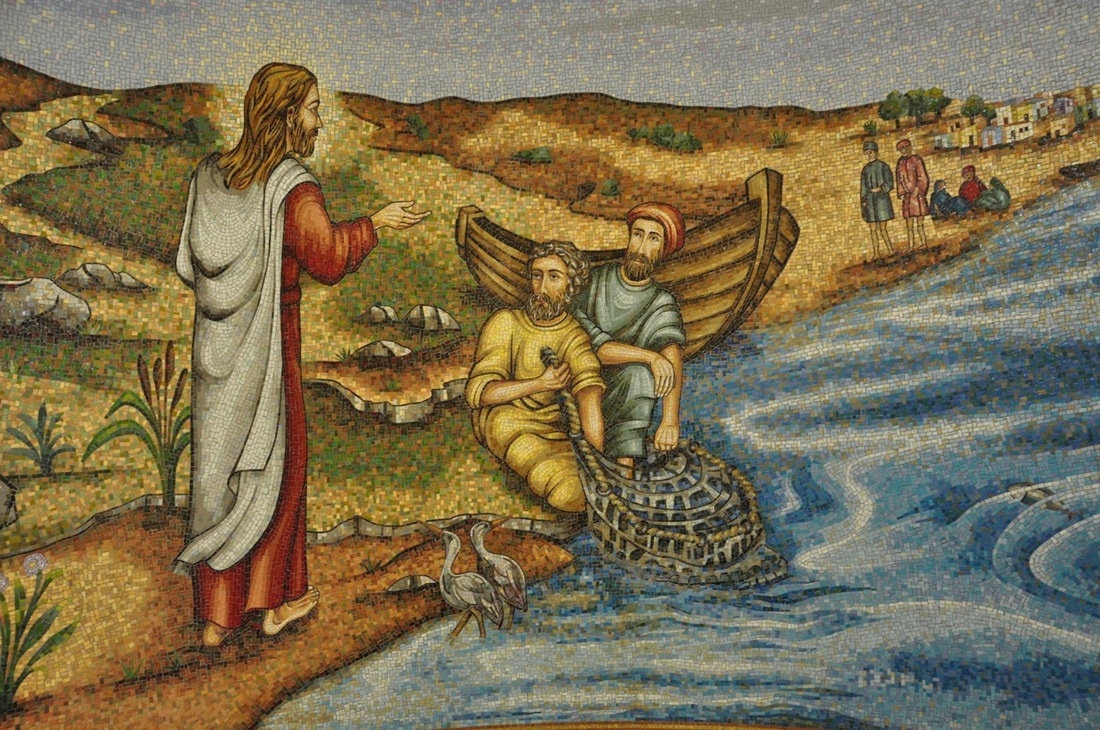
In the gospel according to Matthew Jesus begins his ministry after John the Baptist has been arrested. Jesus moves forward to Galilee, a place mixed up and looked down upon. Matthew stresses that this fulfils the prophecy made by Isaiah “people who live in darkness have seen a great light”, for Jesus brings God’s light but not to the powerful centers but to does in marginalized.
His message is “repent and believe in the gospel”. Repentance means to change, turning away from the ordinary to the new. He chooses the apostle by saying to them “follow me I will make you fishers of people.” He invites them without coercion or force. God seeks the human cooperation.
Jesus calls ordinary fishermen. Following Jesus requires letting go of security, comfort and sometimes relationships or dreams that define us. The call is demanding, it opens the doors for things we might never have imagined. They were fishing for survival but now Jesus calls them to fish for people. To participate in God’s work is to bring life, hope and salvation.
This is what Jesus did traveling throughout Galilee, preaching and healing. His ministry reveals God who is not distanced from his people, but among his people touching their wounds and restoring their dignity.
The fishermen were comfortable with their routine, knowing what daily life brings. When Jesus invited them, he was offering something new and unfamiliar. Their decision to follow required courage leaving what was familiar to something that was uncertain, trusting that God’s vision is greater than their own.
For many of us, our first reaction will be to reject or resist this gospel. We are comfortable with what we know and have. There are also the fear of uncertainty and our attachment to control. We end up saying this is how we have been doing things, we are comfortable where we are, thank you very much. Routine means safety, even if it limits us.
The gospel challenges us to ask, “what are the nests we cling to?” that makes us to fear. God does not force us but invites us. When we dare to trust Him, he brings us to a mission bigger than our own. This week God invites us to leave our nests and follow him. Let us leave all to follow his light. Amen.